





















































































































































10 Best Foods to Lower Blood Sugar Naturally: A Science-Backed Guide to Healthy Blood Sugar
Author
RVLNSV PRASAD
Fact-Checked By
Wellness Research Team
Last Updated
July 2026
Author’s Note
After years of reading nutrition research and observing how our daily food choices influence long-term health, I’ve learned that reducing blood sugar isn’t about diets or costly supplements. Small, steady practices can often make the most significant difference. This advice is based on practical experience and evidence from credible health organizations to help you make informed eating choices.
Introduction
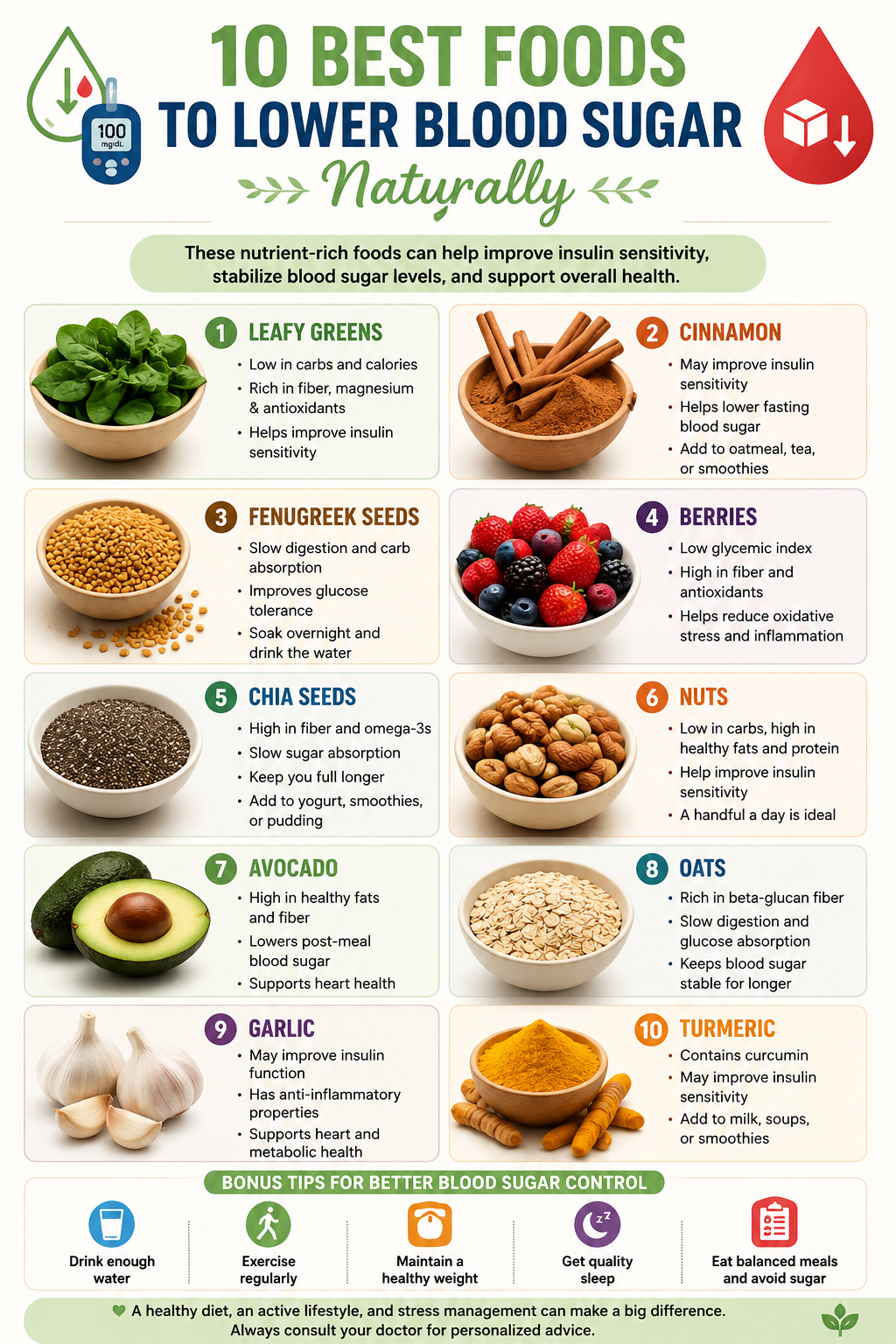
Best foods to lower blood sugar naturally include oats, leafy greens, beans, lentils, plain Greek yogurt, nuts, avocados, fatty fish, eggs, and apples. These foods may help promote healthy blood sugar levels when paired with regular activity and a balanced diet.
Why is blood sugar important?
Along with regular physical activity, good quality sleep, and appropriate medical attention, the best foods to lower blood sugar naturally can be a significant help in fostering consistent energy, healthy eating habits, and overall well-being.
Most people don’t think about blood sugar until they start feeling especially tired, thirsty, or hungry during the day. These changes often happen slowly and are difficult to see.
Seeing a close family member suffer from high blood sugar levels sparked my interest in this subject. The doctor didn’t propose an extreme diet or pricey items. Instead, the instruction was about basic, sustainable habits:
- Get more whole foods in your diet.
- Limit added sugars.
- Be physically active.
- Get enough sleep.
- Keep your weight under control.
That event confirmed a key lesson: what you eat on a daily basis can impact your long-term health.
In this article, you will learn which foods may support healthy blood sugar, why they function, and how to incorporate them into balanced meals.
Key Takeaways
- The best foods to lower blood sugar naturally include oats, leafy greens, beans, lentils, plain Greek yogurt, nuts, avocados, fatty fish, eggs, and apples.
- Build balanced meals with vegetables, lean protein, unsaturated fats, and whole grains.
- Choose high-fiber, low-glycemic foods and limit sugary drinks and processed snacks.
- Support healthy blood sugar with regular exercise, quality sleep, stress management, hydration, and consistent meals.
- No single food can cure diabetes. Healthy eating works best alongside medical care and a healthy lifestyle.
- Small, consistent habits lead to lasting improvements in overall health.
What Is Blood Sugar?
Blood sugar, or blood glucose, is the body’s major source of energy. It mainly comes from the carbohydrates in foods such as fruits, grains, dairy products, and vegetables.
When you eat, carbohydrates are broken down into glucose, which is then released into the bloodstream. Insulin is a hormone that supports the transfer of glucose to the cells of your body for energy.
When this system is functioning well, the blood sugar level is healthy. However, diets heavy in refined carbs, sugary drinks, and ultra-processed foods might cause blood sugar spikes. This may increase the risk of developing insulin resistance and developing type 2 diabetes over time.
It’s not about eliminating all carbohydrates and keeping blood sugar levels low. Instead, it’s about selecting foods that are nutrient-dense and slow to digest, giving you prolonged energy.
How Food Affects Blood Sugar
Different foods affect blood sugar in different ways.
Certain foods are quickly digested and lead to a sharp increase in glucose levels. Others are digested more slowly and help deliver a steadier release of energy.
There are several things that affect this process.
Fiber
Fiber slows digestion and the absorption of glucose into the circulation. Foods with lots of natural fiber tend to cause a smaller rise in blood sugar after a meal.
Protein
Protein increases fullness and slows stomach emptying when consumed alongside carbs. Pairing protein with carbohydrates often reduces larger swings in blood sugar levels. According to the American Diabetes Association, meals that combine fiber-rich carbohydrates, lean protein, and healthy fats can help support healthy blood sugar management and promote steady energy levels.
Healthy Fats
Unsaturated fats—such as those in avocados, almonds, seeds, and olive oil—can slow digestion and make meals more satisfying.
Glycemic Index
The glycemic index (GI) is a rating of how quickly carbohydrate-containing foods raise blood sugar.
Generally:
| Glycemic Index | Effect |
|---|---|
| Low (55 or below) | Slower rise in blood sugar |
| Medium (56–69) | Moderate rise |
| High (70+) | Faster rise |
The glycemic index is a good start, but it doesn’t reveal the complete picture. Your body’s response also depends on how much you eat, how it is cooked, and what you eat it with.
For example, eating brown rice with grilled chicken and vegetables will usually have a different effect than eating brown rice alone because the protein and fiber slow digestion.
Healthy Plate Method
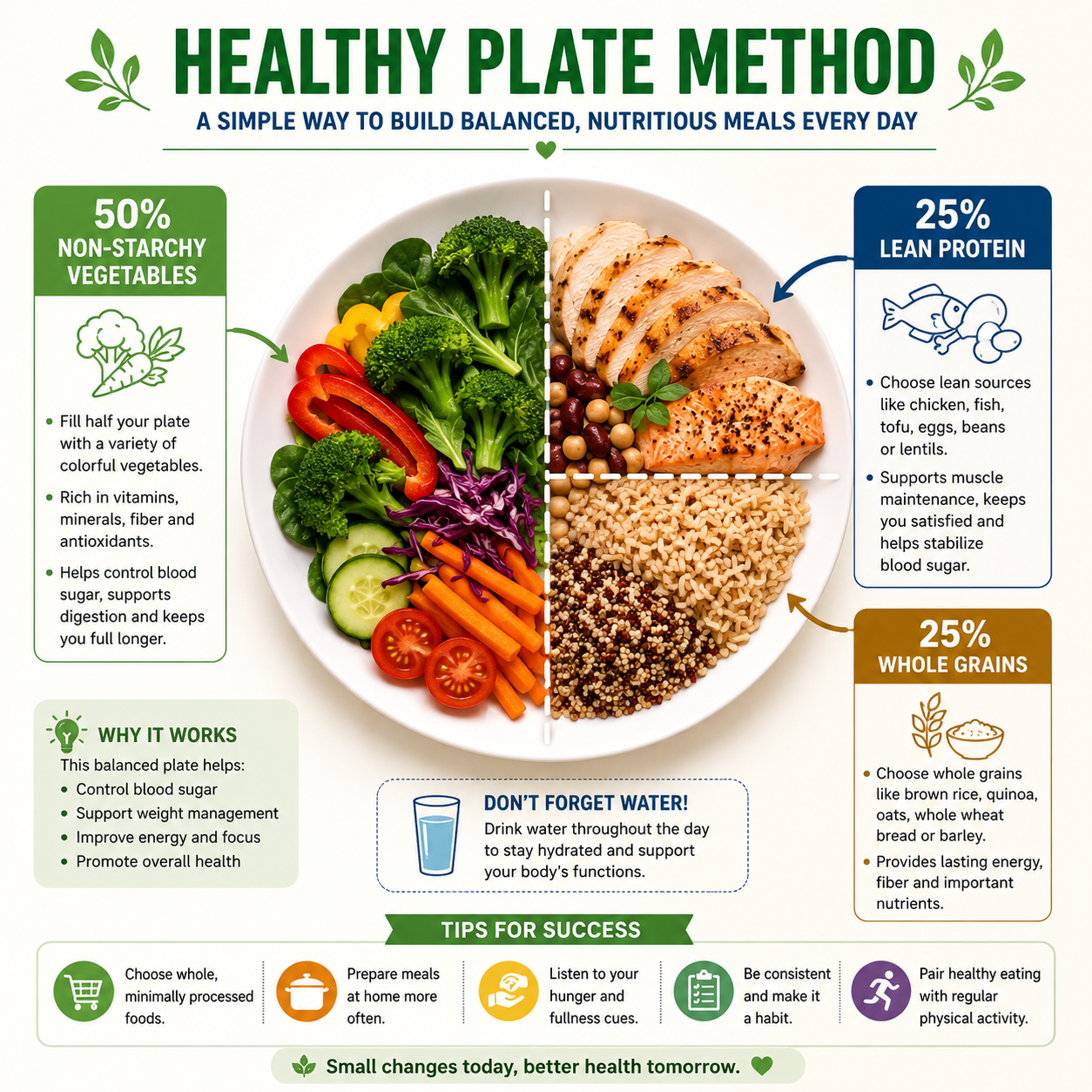
One of the simplest ways to build balanced meals is the healthy plate method. According to the American Diabetes Association, filling your plate with vegetables, lean protein, and high-fiber carbohydrates is a practical way to support healthy blood sugar management.
| Portion | Food Group |
|---|---|
| 50% | Non-starchy vegetables |
| 25% | Lean protein |
| 25% | Whole grains or other high-fiber carbohydrates |
This approach naturally increases fiber and protein while helping control portion sizes.
1. Oats
Oats may help support healthy blood sugar management because their beta-glucan fiber slows digestion and contributes to reducing rapid spikes in blood sugar after meals.
Plain oats digest more slowly than many sweetened breakfast cereals, helping provide longer-lasting energy.
Why are oats a smart choice?
- Provides soluble beta-glucan fiber
- Slowly digested
- Naturally filling
- Also benefits heart health
Easy serving ideas
- Cook plain rolled oats with milk or water.
- Add fresh berries.
- Sprinkle cinnamon.
- Top with chopped walnuts or almonds.
Avoid flavored instant oatmeal whenever possible because many varieties contain added sugars.
2. Eggs
These are a naturally excellent source of protein and are low in carbohydrates. Eggs fit perfectly into balanced meals because they provide high-quality protein with very little carbohydrate.
Plus, a high-protein breakfast could help reduce cravings later in the day, too.
Why choose eggs?
- Excellent source of high-quality protein
- Supports fullness and reduces hunger between meals
- Affordable and widely available
- Easy to prepare in many healthy ways
Enjoy eggs the healthy way:
Boiled eggs
Omelets with vegetables
Scrambled eggs with spinach
Whole grain toast with eggs.
Adding vegetables to eggs while cooking gives fiber and a more balanced meal.
3. Leafy Greens
Leafy greens such as spinach, kale, fenugreek leaves, and Swiss chard are among the most nutrient-dense foods available.
They’re naturally low in calories and carbs and are packed with vitamins, minerals, antioxidants, and fiber.
Because they contain very little digestible carbohydrate, they have only a small effect on blood sugar levels.
Benefits
- High in fiber
- Rich in magnesium
- Supports overall nutrition
- Adds volume to meals without many calories
Simple ways to eat more greens
- Toss spinach into soups.
- Add kale to salads.
- Blend greens into smoothies.
- Include leafy vegetables in stir-fries.
One practical habit that worked in my kitchen was to fill half of my dinner plate with veggies before adding grains or protein. It made it much easier to eat balanced, without having to count calories.
4. Nuts
Almonds, walnuts, pistachios, and peanuts all provide a balanced combination of heart-friendly fats, protein, and fiber.
They help slow digestion and help many people feel full between meals.
There’s also research showing that consistently consuming nuts as part of a well-rounded diet could be beneficial for heart health, which is especially relevant as heart disease and diabetes typically have similar risk factors.
Best choices
- Almonds
- Walnuts
- Pistachios
- Peanuts, raw (unsalted)
Portion guide
Usually a small handful (28 grams or one ounce) is adequate.
But nuts are calorie-rich, so although they’re good for you, they need to be eaten in moderation.
Healthy snack suggestions
- Apple slices and almonds
- Plain Greek yogurt with walnuts
- Mixed nuts and fresh berries
- Trail mix (homemade, no added sugar)
5. Plain Greek Yogurt
Plain Greek yogurt is a nutritious addition to a well-rounded diet, with high-quality protein and less sugar than many flavored yogurts.
Its protein content encourages slower digestion, and active probiotic cultures can help maintain gut health. Research on the gut microbiome and blood sugar is still evolving, but proper digestion is a crucial part of general health.
I used to buy fruit-flavored yogurt without checking the nutrition facts. I switched back to plain Greek yogurt with fresh fruit, and it was just as tasty without the extra sugars.
How it helps
- Protein-rich
- Less sugar than fruit yoghurt
- Contains probiotics
- Supports boosted satiety
Healthy serving ideas
- Greek yogurt plain with blueberries
- Add chia or flax seeds.
- Dust with cinnamon
- Sprinkle with chopped almonds or walnuts.
Tip: Choose the unsweetened kinds and add fresh fruit instead of flavored syrups.
6. Lentils and Beans
Beans and lentils are some of the cheapest, most nutritious foods for balanced blood sugar.
They have complex carbs, plant protein, and fiber that break down more slowly than refined carbohydrates. This combination will help to provide you steady energy and keep you full longer.
Healthy choices
- Lentils
- Chickpeas
- Black beans.
- Kidney beans
- Red beans
How they help
- Great source of fiber
- Rich in plant proteins
- Help keep you full longer
- Promote intestinal health
Simple meal ideas
- Lentil soup
- Chickpea salad
- Bean curry
- Mixed bean chili
- Brown rice with lentils
It’s so much easier to eat healthy during the week when you cook in bigger portions on the weekend.
7. Cinnamon
Cinnamon has been examined for its potential function in promoting healthy blood sugar levels.
Certain studies suggest it may enhance insulin sensitivity in some individuals, although the findings are inconsistent. More high-quality studies are still needed.
Because of these findings, cinnamon should be viewed as a flavorful addition to a healthy diet—not as a treatment for diabetes.
Easy ways to use cinnamon
- Stir into oatmeal
- Add to plain yogurt
- Sprinkle over sliced apples
- Mix into smoothies
A small amount goes a long way, adding flavor without extra sugar.
8. Avocados
Avocados are rich in healthy monounsaturated fats and dietary fiber.
These nutrients slow down your digestion and make you feel full, so a balanced meal feels more fulfilling.
Avocados are also loaded with beneficial vitamins and minerals and contain very little natural sugar, unlike many manufactured snack items.
Advantages
- Rich in good fats
- High in fiber
- Support heart health
- Increases satiety
Healthy serving ideas
- Whole-grain avocado toast
- Add to salads
- Mix into smoothies
- Uses in wraps
- Serve with grilled chicken
You can use one avocado for numerous meals, so it’s simple to portion out and still get the nutritional benefit.
9. Fatty Fish
Fatty fish such as salmon, sardines, trout, and mackerel are rich in omega-3 fatty acids, which help to maintain heart health.
Those who are managing their blood sugar are generally encouraged to pay attention to heart health, because the two are linked.
It also provides high-quality protein without carbohydrates, so it’s a good option for balanced meals.
Healthy options
- Salmon
- Sardines
- Trout
- Mackerel
Benefits
- High-quality protein
- Loaded with omega-3 fats
- Supports heart health
- Promotes fullness
Meal ideas
Vegetables with grilled salmon
Baked trout
Sardine salad
Fish tacos using whole-wheat tortillas
Try to bake, grill, steam, or air-fry your fish instead of deep-frying whenever you can.
10. Apple
Apples are one of the easiest fruits to fit into a healthy eating regimen.
They are high in fiber, especially the skin, which slows digestion and supports delivering longer-lasting energy than sugary foods.
Generally it’s preferable to eat whole fruit than to drink fruit juice because the liquid takes away a lot of the natural fiber.
How apples help
- High in fiber
- Naturally sweet
- Convenient treat
- Easy to combine with protein
Healthy snack ideas
- Apple slices and peanut butter
- Apple with almonds
- Apple with plain yogurt
- Cottage cheese with apple
A better balanced snack is achieved when you pair fruit with a protein or a healthy fat.
Comparison Table: Best Foods to Lower Blood Sugar Naturally
| Food | Key Nutrient | Main Benefit | Easy Serving Idea |
|---|---|---|---|
| Oats | Beta-glucan fiber | Slows digestion | Oatmeal with berries |
| Eggs | Protein | Promotes fullness | Vegetable omelet |
| Leafy Greens | Fiber, magnesium | Low in carbohydrates | Spinach salad |
| Nuts | Healthy fats, protein | Reduces hunger | Handful of almonds |
| Greek Yogurt | Protein, probiotics | Supports fullness | Yogurt with berries |
| Beans & Lentils | Fiber, plant protein | Steady energy | Lentil soup |
| Cinnamon | Plant compounds | Adds flavor without sugar | Sprinkle on oats |
| Avocados | Healthy fats | Supports heart health | Avocado toast |
| Fatty Fish | Omega-3 fats | Heart-friendly protein | Grilled salmon |
| Apples | Fiber | Balanced snack | Apple with peanut butter |
Foods That Can Make Blood Sugar Skyrocket
Some meals are broken down quickly and might cause bigger spikes in blood sugar, especially if you eat a lot of them.
While you don’t always have to completely avoid these items, limiting the intake and controlling portion sizes can help promote healthy eating habits.
Some examples:
- Sugar-sweetened beverages
- Candy
- Pastries and cakes
- White bread
- White rice.
- Breakfast cereals (sweet)
- Added-sugar fruit juices
- Packaged desserts
- Potato chips
- Heavily processed snack foods
You can increase the quality of your overall diet by swapping these foods for more nutrient-dense options.
Foods to Choose vs Foods to Limit
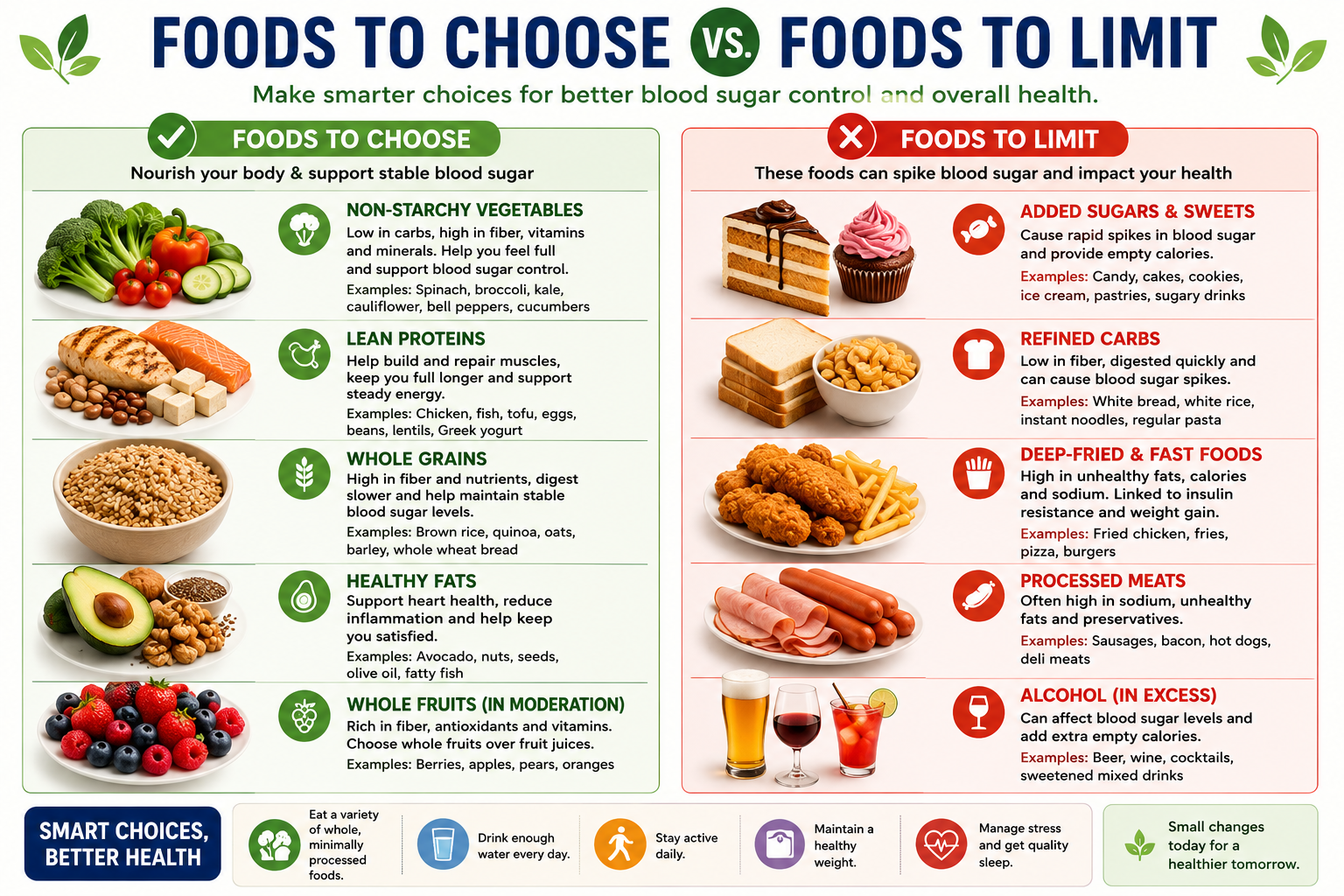
| Choose More Often | Limit More Often |
|---|---|
| Vegetables | Sugary drinks |
| Whole grains | White bread |
| Beans | Candy |
| Lentils | Cakes |
| Oats | Sweet cereals |
| Nuts | Cookies |
| Plain yogurt | Flavored yogurt with added sugar |
| Fresh fruit | Fruit juice |
| Fish | Fried fast food |
| Healthy fats | Processed snacks |
One-Day Blood Sugar-Friendly Meal Plan
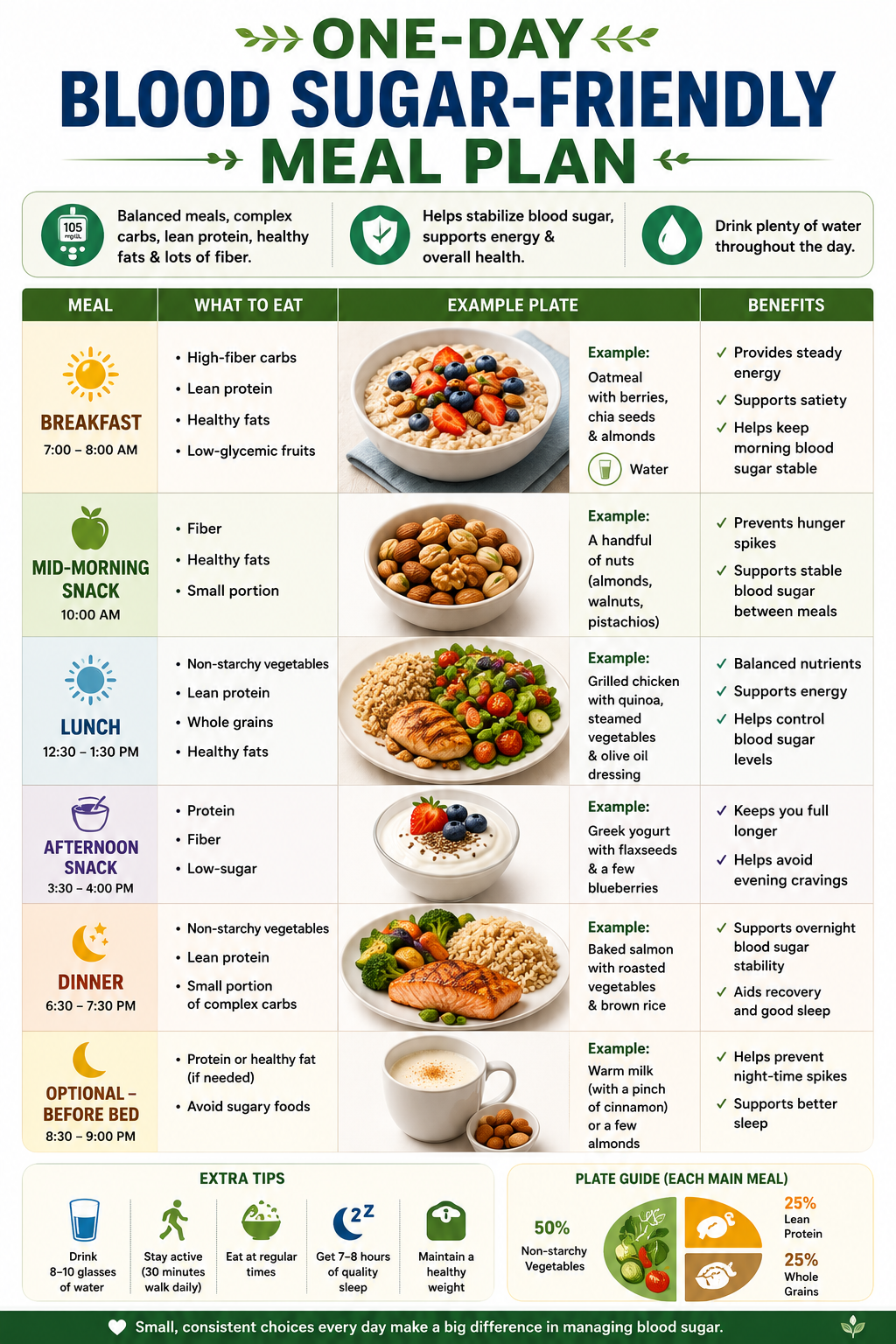
| Meal | Example |
|---|---|
| Breakfast | Oatmeal with blueberries and walnuts |
| Morning Snack | Apple with almonds |
| Lunch | Grilled chicken, brown rice, and mixed vegetables |
| Afternoon Snack | Plain Greek yogurt with chia seeds |
| Dinner | Baked salmon with broccoli and quinoa |
| Evening Snack | Small handful of pistachios |
This meal pattern combines fiber, lean protein, and healthy fats to help create balanced meals throughout the day.
Healthy Lifestyle Tips To Help Blood Sugar
Diet is only one part of keeping your blood sugar levels healthy.
And daily routines are vital too.
Stay physically active
Movement on a regular basis helps your muscles use glucose more efficiently.
Easy things to do are:
- Fast walking
- Bicycling
- Swimming
- Strength training
- Gardening
Aim for at least 150 minutes of moderate physical activity each week unless your health care professional tells you to do otherwise.
Prioritize Quality Sleep
Poor sleep can impact hormones that control hunger and blood sugar.
Most adults require 7 to 9 hours of quality sleep each night.
Here are some easy strategies to get better sleep:
- Sticking to a regular bedtime
- Reducing caffeine later in the day
- Cutting down screen time before bed
- Creating a good sleeping environment
Stress Management
Prolonged periods of stress might alter your eating patterns and how your body manages blood sugar.
Healthy ways to manage stress include:
- Deep breathing
- Meditation.
- Yoga
- Spending time outdoors
- Speaking to supportive friends or family members
Taking a few minutes a day to relax can make it much simpler to stick with your good practices.
Drink Enough Water
Water is the best beverage for hydration and is needed for many vital activities in the body.
Swapping sugary drinks with water is one simple way to reduce unneeded added sugars in your diet.
Eat Balanced Meals
Don’t think about single foods; think about your whole plate. The American Diabetes Association recommends building balanced meals that include vegetables, lean protein, healthy fats, and high-fiber carbohydrates rather than relying on a single “healthy” food.
A typical healthy dinner consists of:
- Half your plate should be vegetables
- One-quarter lean protein
- One quarter whole grains or other high-fiber carbohydrates
- A small amount of healthy fat.
It is easier to maintain than restrictive diets and offers a broad spectrum of nutrients.
Smart Grocery Shopping Tips
Buying healthy foods doesn’t have to be expensive or complicated. Planning ahead can help you make healthier choices and avoid impulse buys.
Prepare a Shopping List
A shopping list helps you stay on track and makes it easier to select goods that encourage healthy eating habits.
Check the nutrition labels.
Look at comparable products and observe:
- Added sugars
- Fiber content
- Protein
- Sodium
- Serving size
Even a product that is marketed as “healthy” can still be loaded with added sugar.
Shop the Perimeter First
Most grocery stores will have fresh vegetables, fruits, dairy goods, fish, and lean meats around the outer sections. Not every healthful food is there, but starting in these aisles will help you load your basket with more whole foods before you reach the packaged food sections.
Buy Seasonal Produce
Imported produce is often less fresh, more expensive, and as equally nutritious as seasonally grown fruits and vegetables.
Keep healthy staples at home.
It’s much easier to cook a balanced meal when you have nutritious foods on hand.
Useful staples include:
- Rolled oats
- Brown rice
- Beans
- Lentils
- Plain Greek yogurt
- Eggs
- Frozen vegetables
- Nuts and seeds
- Olive oil
- Fresh fruit
Common Mistakes That Can Impact Blood Sugar
Even people with excellent intentions can get into habits that make blood sugar management harder.
1. Not Eating Breakfast
Skipping breakfast can make you hungrier later and lead to overeating.
2. Drinking Sugary Beverages
Soft drinks, sweetened coffee, energy drinks, and fruit juices might be packed with extra sugar and won’t fill you up.
Water, sparkling water without additional sugar, or unsweetened tea are generally healthier everyday options.
3. Not getting enough vegetables
Vegetables have fiber, vitamins, and minerals; they give bulk to a meal with relatively few calories.
Try and eat vegetables at lunch and dinner if you can.
4. Overlooking Portion Sizes
Of course, even healthy meals can lead to too many calories if you eat too much.
Try using smaller dishes or periodically measure out portions to have a better idea of serving sizes.
5. Over-Reliance on Processed Foods
Highly processed foods tend to have refined carbs, unhealthy fats, salt, or added sugars.
The more often you cook basic meals at home, the more control you have over the ingredients.
6. Poor Sleep Patterns
Getting less than enough sleep on a regular basis might affect the hormones that control hunger, appetite, and blood sugar.
Establishing a regular sleep schedule is good for general health.
7. A Sedentary Lifestyle
“Sitting for a long time without moving can reduce the body’s ability to use glucose effectively.
Taking a few walks after a meal or exercising regularly over the week will help.
8. Wanting Fast Results
Healthy behaviors tend to work over time.
Usually, it’s not one food or one meal that changes everything overnight.
Consistency is more important than perfection.
Myth vs. Fact
| Myth | Fact |
|---|---|
| One food can cure diabetes. | No single food can cure diabetes. Healthy eating supports overall blood sugar management but does not replace medical care. |
| Fruit should always be avoided. | Whole fruits can be part of a balanced eating plan because they provide fiber, vitamins, and antioxidants. |
| Carbohydrates are bad. | The type and amount of carbohydrate matter more than eliminating them completely. |
| Healthy eating has to be expensive. | Many affordable foods, such as oats, beans, lentils, eggs, and frozen vegetables, are nutritious choices. |
| People with healthy blood sugar never need to think about nutrition. | Nutritious eating habits support health at every stage of life. |
Small Everyday Habits Can Make a Big Difference.
It’s frequently the choices you make consistently, not dramatic changes, that improve blood sugar.
Start with simply one or two habits:
- Eat one additional serving of vegetables each day.
- Replace one sugary drink with water.
- Include a source of protein with breakfast.
- Choose whole grains more often than refined grains.
- Take a 20–30 minute walk most days of the week.
- Aim for a regular sleep schedule.
These little activities can become sustainable habits over time.
Frequently Asked Questions
1. What are the best foods to lower blood sugar naturally?
A well-rounded diet that includes foods like oats, leafy green vegetables, beans and lentils, plain Greek yogurt, almonds, salmon, eggs, avocados, and apples could help encourage healthy blood sugar.
2. Can you manage blood sugar by diet alone?
Eating well is important, but it’s only one piece of the blood sugar management equation. Exercise, getting enough sleep, managing stress, maintaining a normal weight, and following the advice of your health-care professional also are crucial.
3. Do all carbs spike blood sugar?
No. Whole grains, legumes, fruits, and vegetables are important sources of nutrients and dietary fiber. Sometimes it’s better to choose less processed carbohydrate sources and monitor the amount rather than eliminate carbohydrates completely.
4. How much fiber do adults need?
Most adults should get 25–38 grams of fiber per day, depending on age and sex. Good sources are fruits, vegetables, whole grains, legumes, and seeds.
5. Should people trying to control blood sugar eat fruit?
Yes. Whole fruit contains natural carbohydrates but also fiber, vitamins, and antioxidants. And eating whole fruit is usually a better choice than drinking fruit juice.
6. Best Beverage for Healthy Blood Sugar
For most people, water is the best everyday drink. Unsweetened tea and coffee also can be included as part of a healthy eating pattern without adding excess sugar.
7. Does late-night eating affect blood sugar?
Not everyone should eat late at night, especially if it’s a substantial meal or one high in refined carbohydrates. A regular eating schedule might help promote healthy eating.
8. When should I talk to a healthcare provider?
If you feel thirsty a lot, tired for no reason, urinating more, having blurred vision, or worried about your blood sugar, get an exam and advice just for you from a doctor who knows about health.
Author Authority
This article was written based on a review of recommendations from reputable health organizations, including the American Diabetes Association, Harvard T.H. Chan School of Public Health, Mayo Clinic, Cleveland Clinic, and peer-reviewed research in the area of nutrition. It also takes advantage of practical observations of creating healthy eating habits through realistic and sustained lifestyle adjustments.
References
- American Diabetes Association – Nutrition and Healthy Eating
- Harvard T.H. Chan School of Public Health – The Nutrition Source
- Mayo Clinic – Diabetes Diet: Create Your Healthy-Eating Plan
- Cleveland Clinic – Diabetes Diet: Healthy Foods for Diabetes
- Centers for Disease Control and Prevention (CDC) – Diabetes Nutrition
- National Institute of Diabetes and Digestive and Kidney Diseases (NIDDK) – Diabetes Diet, Eating, & Physical Activity
- National Institutes of Health (NIH) – Office of Dietary Supplements
- PubMed – National Library of Medicine
- World Health Organization (WHO) – Healthy Diet
- Academy of Nutrition and Dietetics – Eat Right
Suggested Scientific Studies (Peer-Reviewed)
These are excellent for supporting statements about fiber, low-glycemic foods, and blood sugar management.
- PubMed: Dietary Fiber and Glycemic Control Research
- PubMed: Oats (Beta-Glucan) and Blood Glucose Studies
- PubMed: Cinnamon and Blood Glucose Research
- PubMed: Mediterranean Diet and Type 2 Diabetes
- PubMed: Low Glycemic Index Diet and Diabetes
Conclusion
You don’t need to deprive yourself of foods or search for a “superfood” to find the best foods to lower blood sugar naturally. This approach is consistent with recommendations from organizations such as the American Diabetes Association, which emphasize balanced eating patterns rather than strict or restrictive diets. Small, consistent choices Often have a greater long-term impact than short-term dietary changes.
Often, small behaviors such as cooking more food at home, being active, drinking enough water, sleeping enough, and managing stress might be more helpful than doing extreme diets or quick fixes.
If you have diabetes or another medical condition, consult your healthcare provider or a certified dietitian to design a dietary plan that suits your unique needs. naturally.
Small, regular adjustments today can lead to better health in the future.
Medical Disclaimer
This text is solely for educational purposes and is not a substitute for medical advice, diagnosis, or treatment. If you have diabetes, pre-diabetes, or any other medical condition, please consult a certified healthcare practitioner before making any significant changes to your diet, exercise regimen, or medications.
Similar topics
10 Best Ways to Remove Warts Permanently
10 Best Herbal Remedies to Control Diabetes
10 Best Workouts To Get Six Pack Abs at Home(Opens in a new browser tab)
Related Posts
- 7 Simple Health Changes to Reduce The Risk of Chronic Disease
- 5 Simple Home Exercises for Hypothyroidism to Lose Weight
- Train Smarter, Not Harder: Optimizing Workouts for Maximum Results
- Home
- Category











[…] 10 Best Foods to Lower Blood Sugar Naturally: A Science-Backed Guide to Healthy Blood Sugar […]
[…] 10 Best Foods to Lower Blood Sugar Naturally: A Science-Backed Guide to Healthy Blood Sugar […]
[…] 10 Best Foods to Lower Blood Sugar Naturally: A Science-Backed Guide to Healthy Blood Sugar […]
[…] 10 Best Foods to Lower Blood Sugar Naturally: A Science-Backed Guide to Healthy Blood Sugar […]
[…] 10 Best Foods to Lower Blood Sugar Naturally: A Science-Backed Guide to Healthy Blood Sugar […]
[…] 10 Best Foods to Lower Blood Sugar Naturally: A Science-Backed Guide to Healthy Blood Sugar […]